Big Ideas, Real Impact.
Big Ideas, Real Impact.
Independent Research Strategy Consulting · Ongoing Thought Partnership · Women’s Health Insights
Building the research foundation for an emerging field of women's health
Problem
A founder preparing to launch a research-backed institute had identified a critical gap in women's health: while physical and individual health outcomes have received significant attention, the role of relationships, social connection, and relational well-being in women's health had been comparatively overlooked.
The vision was clear, but in order to launch, the CEO needed to demonstrate that this gap was not just an observation, but a measurable area of need. The organization needed research that could validate the opportunity, inform its launch, and establish a foundation for future work.
My Role
I was engaged as an external research strategist and thought partner, helping to translate a vision for advancing women's relational health into a rigorous research framework. Rather than approaching the project as a data collection exercise, I worked with the founder to identify the core questions that would establish the importance of relational health in women's lives: What role do relationships play in women's well-being? Where are women experiencing unmet needs? What barriers prevent stronger connection and support?
Through iterative consulting sessions, I helped define which research questions would actually demonstrate the market need to a launch audience, then owned the full pipeline myself: instrument design, fielding, statistical analysis, data visualization, and report-ready findings.
Approach
The CEO came in with the question "What does the data say about women’s relational health?". I probed, I pushed, and I pressure-tested. Through that process, the question we found to actually be worth asking is "What evidence would help the world better understand why women's relational health deserves attention?"
I designed a survey that was fielded to a demographically representative U.S. sample on Prolific to examine women's experiences with relationships, connection, support systems, and the factors shaping relational well-being. The analysis integrated behavioral science frameworks with quantitative evidence to transform a broad question into measurable insights that could drive the organization forward.
Outcome
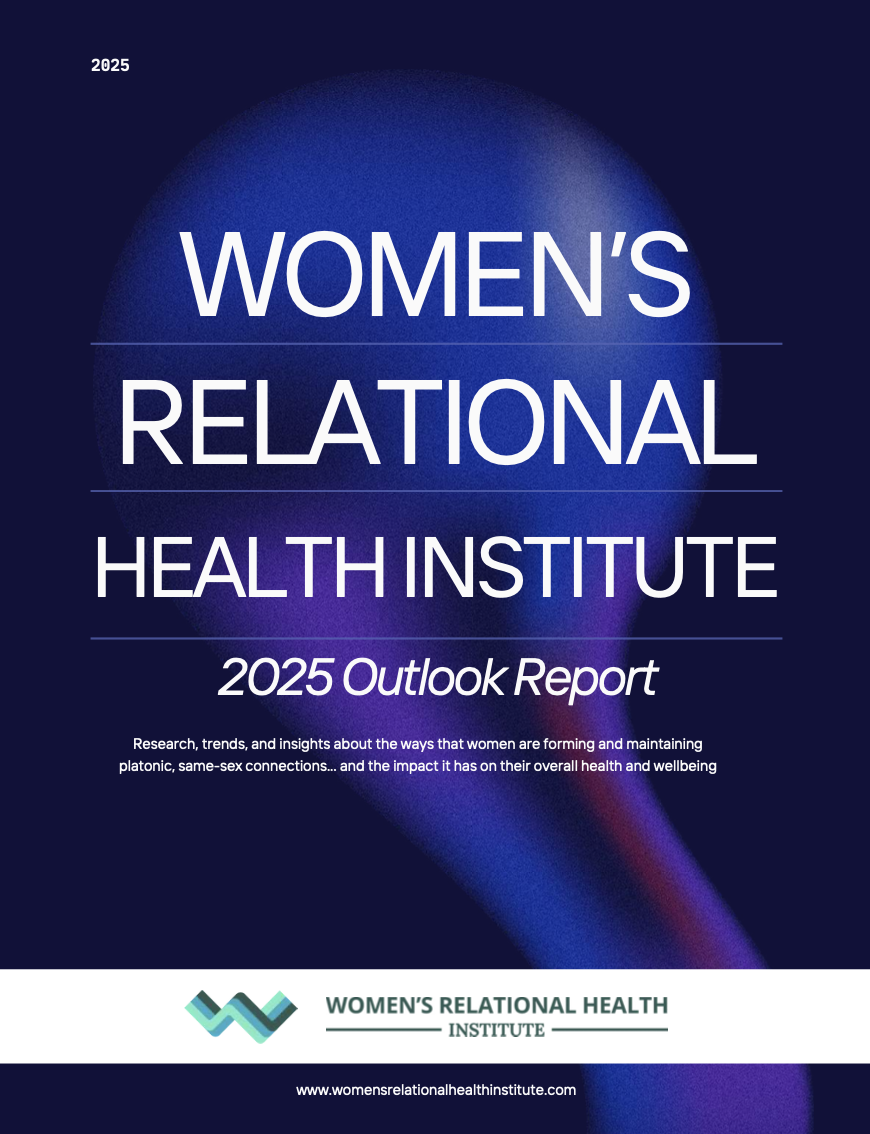
The resulting dataset and analysis became the evidentiary foundation for the institute's public launch report — providing the research, statistics, and visual storytelling needed to demonstrate the importance of women's relational health as an emerging area of focus.
The real ask wasn't to analyze data — it was to demonstrate that this question matters.
The engagement has continued beyond the initial report, with ongoing collaboration as a research advisor and thought partner shaping future research priorities and initiatives.
Read the full report here!
Research Strategy Consulting · Long-Term Executive Advisory · Research Function Development · Client Details Withheld Under NDA
Building a two-year research roadmap: Reframing AI through a human behavior lens
Problem
An emerging technology organization focused on the intersection of AI and social science was ready for its next phase of growth.
The initial ask was straightforward: build a dataset that could support the training of their AI model and product. Through iterative consulting, it became clear that the need was not a dataset — it was the behavioral science foundation required for the product, and a research function capable of advancing the product over time.
With a broad mission and rapidly evolving technological landscape, the organization needed a structured research roadmap that could transform big-picture goals into a focused, actionable research agenda suitable for a round of fundraising.
Approach
The initial request focused on the data: create a dataset that could support an AI system designed to understand human behavior.
The challenge I recognized was that meaningful behavioral data cannot exist without a solid framework. Before determining what data the AI model should learn from, we first needed to define what aspects of human behavior mattered, how those constructs should be understood, and what evidence would be required to represent them accurately. I reframed the project from a data-generation exercise into a behavioral science research strategy.
Together with the CEO, I identified the foundational questions the organization needed to answer: What dimensions of human behavior should the model capture? How should those concepts be operationalized? Where are the existing evidence gaps? What research infrastructure would be required to build this responsibly? What does success look like?
This process transformed a narrow technical request into a broader research roadmap through which I defined the scientific foundation, the research priorities, and the long-term capabilities needed to develop this technology
My Role
I now serve as the organization's Lead Research Advisor, partnering with leadership to build this research function from the ground up.
My role bridges behavioral science, research strategy, product development, and organizational growth. I developed a two-year research roadmap, recruited our first full-time research scientist, and continue to define research priorities and behavioral frameworks. I advise on methodology, and help to establish the infrastructure needed to execute the organization's long-term vision.
I work closely with the engineering team, collaborating iteratively to translate behavioral science concepts into data requirements and ensure that technical decisions are grounded in meaningful representations of human behavior.
Beyond research development, I support broader organizational strategy by presenting research plans and findings to investors, contributing to proposals, and helping to articulate the value of an AI product rooted firmly in social science theories of human behavior.
Outcome
What started as a one-off engagement transformed an early-stage technical concept into research-backed strategy. I was sole developer of the initial two-year research roadmap, I recruited and helped establish the initial research team, and I have guided product testing. I continue to advise leadership as the organization moves toward broader implementation and client adoption.
The organization has since moved from research planning into implementation, completing an initial product testing phase, establishing an interdisciplinary team, and beginning real-world application of the platform with its first client engagement.